
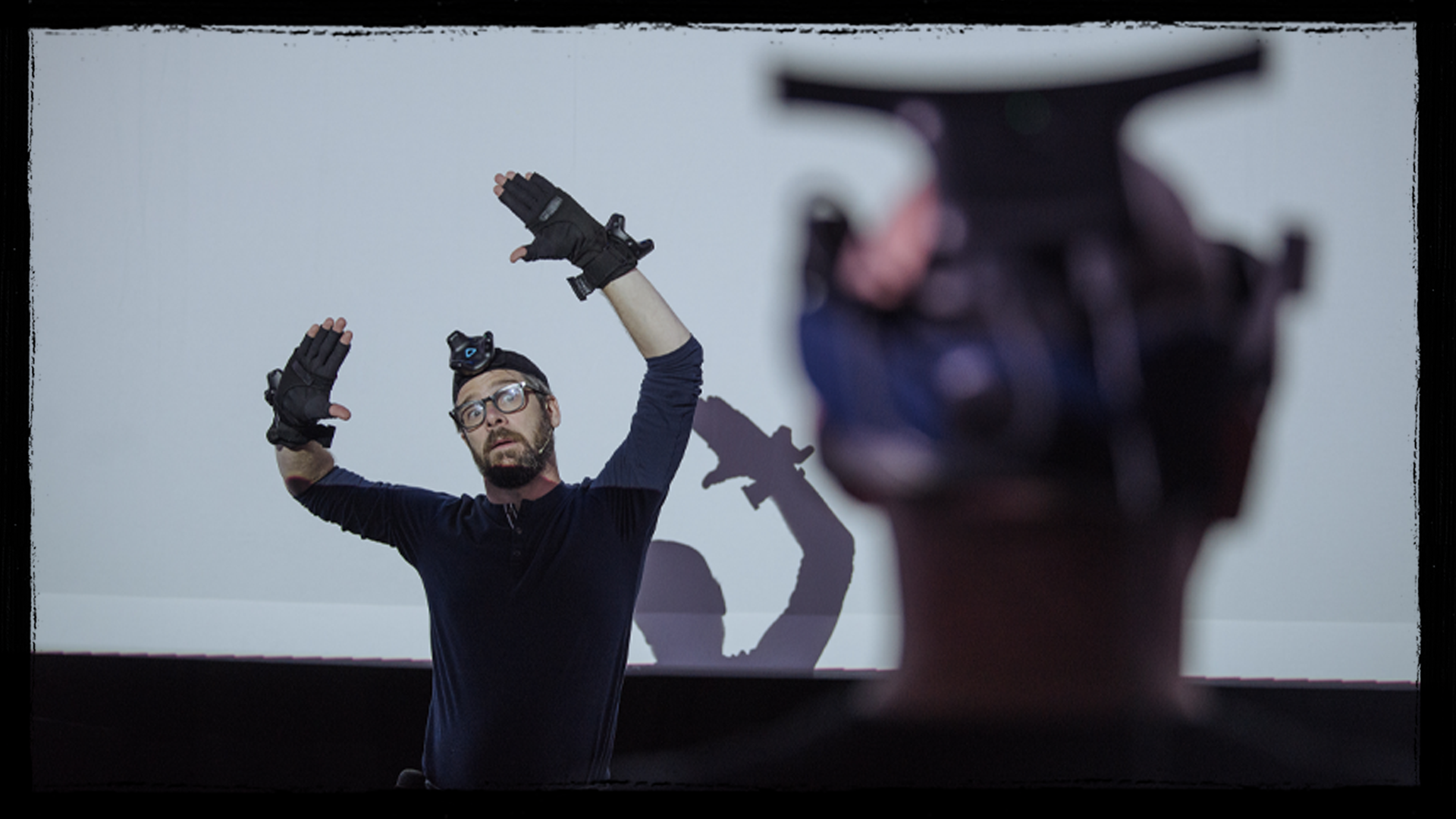
Fatherland (2019)
For almost a decade, The Old Market has been a creative testing ground for the future of live performance. Since 2016, the programmes in our TOMtech umbrella have given artists the time, space, technical expertise and freedom to experiment with emerging technologies, allowing them to discover new ways of telling stories, making work and connecting with audiences.
This is a legacy we’re incredibly proud of. As a small independent venue, we have supported more than 450 artists through our Labs and R&D programmes. Before the pandemic, more than 18,000 people experienced VR and immersive work through TOMtech. In 2025 alone, eight ImmersiveLABs brought together 156 artists and led to four commissions. These aren’t just isolated moments of innovation; they’re the creative end result of sustained investment in artists and ideas.
A creative testing ground since 2016
TOMtech began with a simple ambition: to explore what happens when live performance meets new technology. From the outset, The Old Market has treated technology as a creative tool rather than an end in itself. The point is not to chase the latest device or create spectacle for its own sake. We want to help artists ask better questions: how might an audience move through a story? How can sound, image and performance change the way we feel together? What becomes possible when a work can exist across physical and virtual worlds?
That approach has made TOMtech a greenhouse for new ideas. Artists need room to test, fail, adapt and try again, especially when working with tools that can be expensive, unfamiliar or difficult to access. Our Labs and R&D programmes create the conditions for that work: practical support, technical knowledge, peer exchange and the confidence to follow an idea before its final form is clear.
Landmark projects and new worlds
The story of TOMtech is best told through the artists and projects that have shaped it.
Habitats, made with Marshmallow Laser Feast, was an ambitious early exploration of laser installation and VR. It pointed towards the kind of work we wanted to champion: immersive, imaginative and capable of changing how people experience a space.
Doom Room, created with Danish studio Makropol, brought live performance and virtual reality into the same encounter. Its ceremonial journey through death and rebirth invited participants to consider identity from a different angle. It was a bold example of how artists can use physical and virtual worlds together to make an experience that is both intimate and expansive.
These projects sit alongside many other experiments in immersive storytelling, audience experience and live art. Collectively, they show the breadth of TOMtech to support performance wherever artists’ questions and collaborations lead.
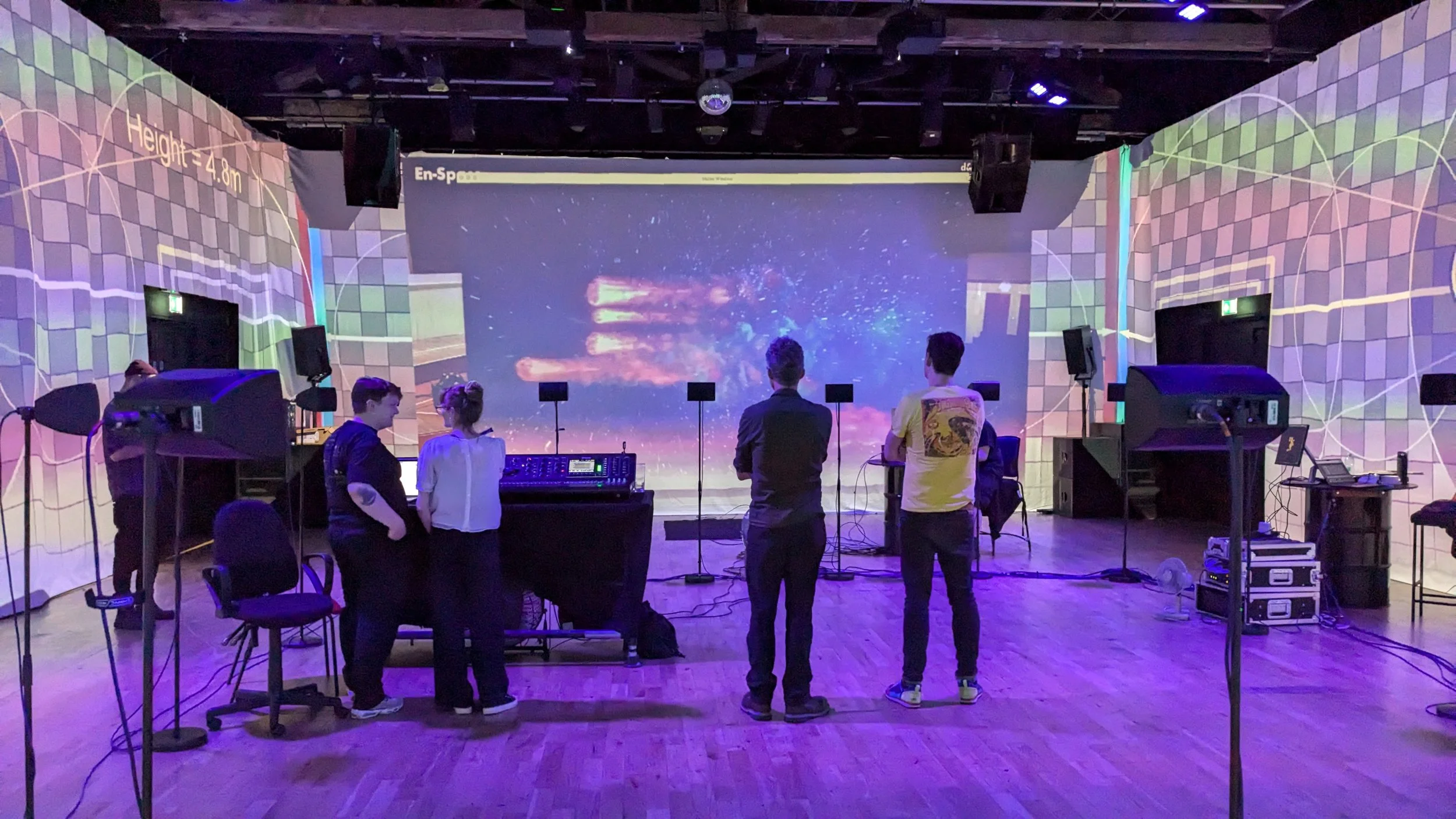
In The Box is part of the journey
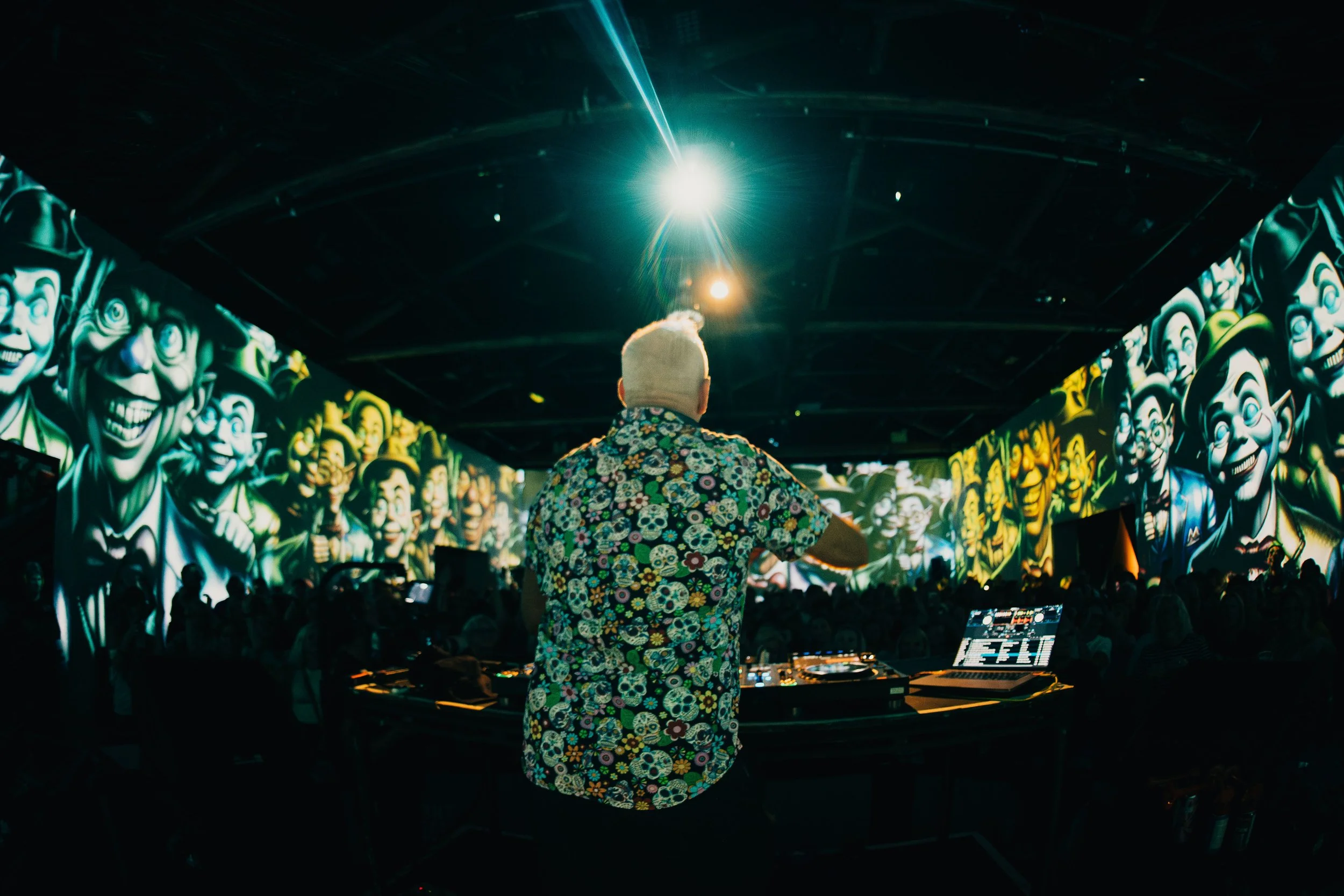
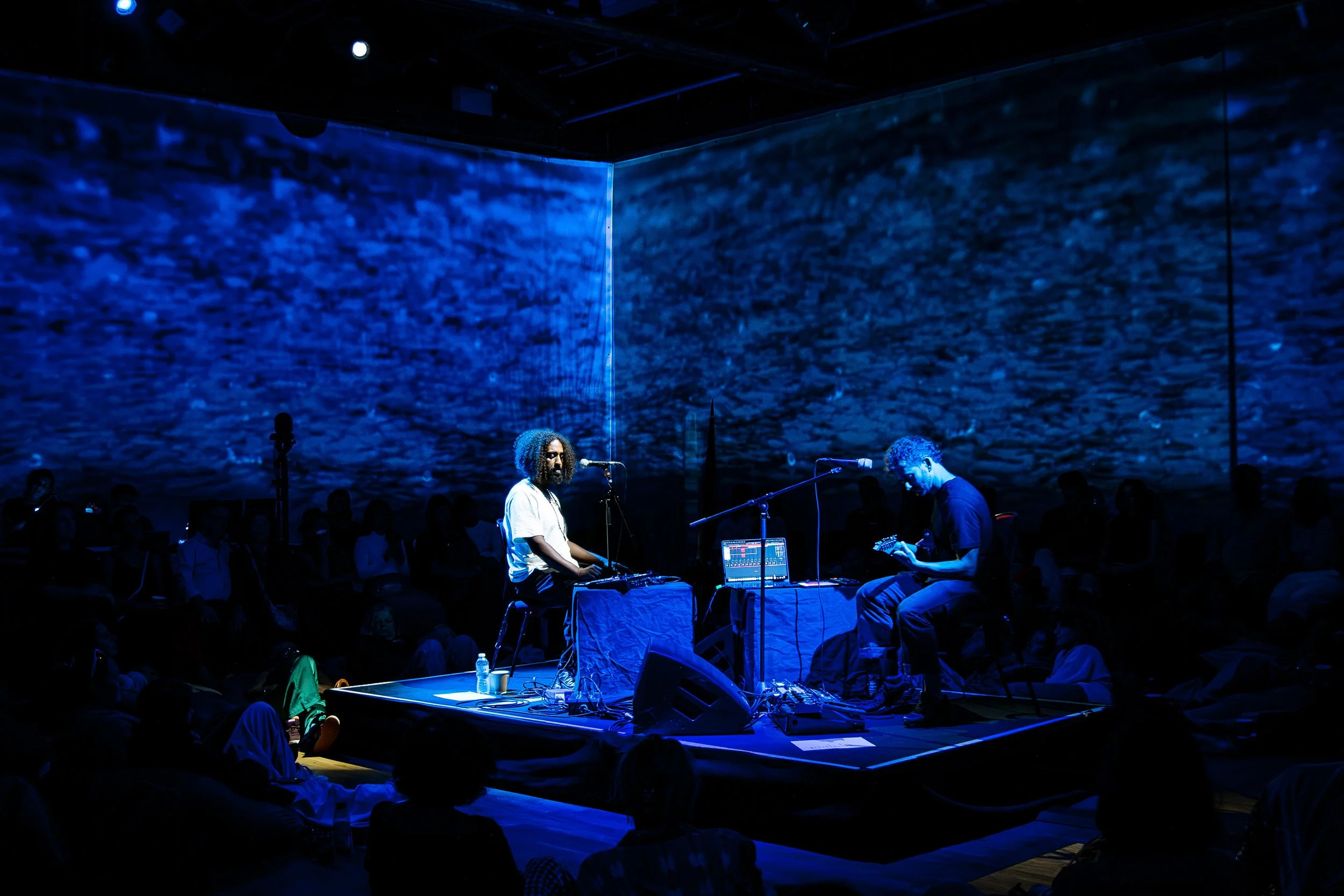
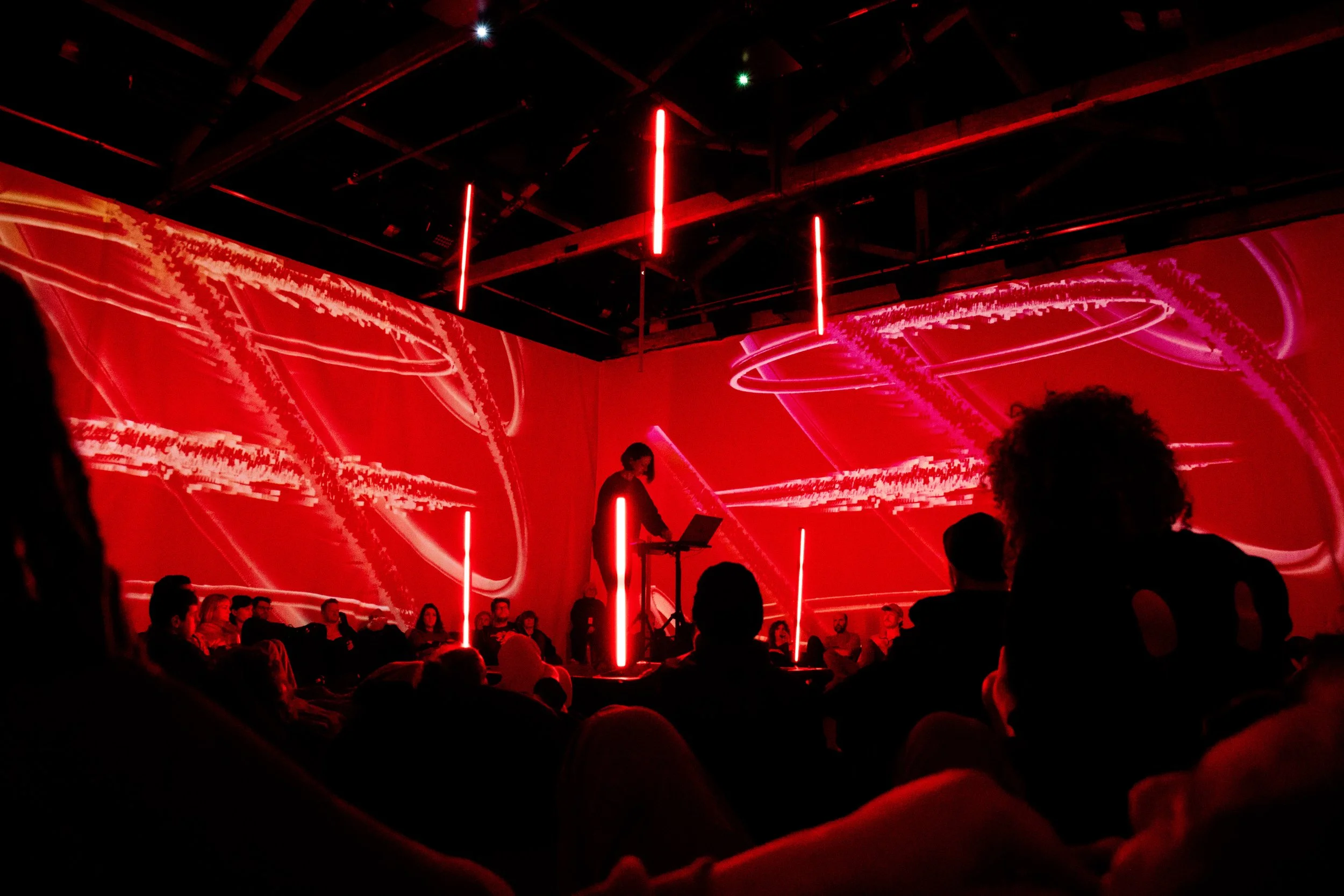
In The Box is one audience-facing expression of this wider work. It is not simply a technical installation; it is an evolution of years of research, experimentation and artist development through TOMtech. The 360-degree environment gives artists another way to create live, shared experiences — and gives audiences new ways to enter them.
Halina Rice’s New Worlds helped launch In The Box. Combining 360-degree visuals and spatial sound, it explored how music and digital environments can surround an audience. The project also made room for learning and exchange, with a free daytime installation, a live performance and Q&A, and a masterclass for female-identifying and gender-expansive creators interested in developing immersive work.
This is the relationship that matters: TOMtech is the wider programme of research, experimentation and artist development; In The Box is one way that learning becomes a public encounter. Both are part of an ongoing commitment to help artists make work that could not exist without time, trust and the right conditions.
A shared creative ecosystem
TOMtech has never been built in isolation. Our work has been strengthened by conversations and collaborations with organisations including Lighthouse, Audio Active, Brighton University, the London School of Economics and Make Real, alongside artists, researchers and creative practitioners across the region and beyond. These relationships bring different perspectives into the room and help us connect artistic practice with new knowledge, new communities and new possibilities.
That ecosystem is vital. Innovation in the arts does not happen because one venue acquires new equipment. It happens when artists, technologists, researchers and audiences have opportunities to learn from one another. TOMtech is our commitment to facilitating that exchange of ideas over time.
Where the work is heading
The next chapter of TOMtech builds on this history while looking outward. We are increasingly interested in creative health, collective experiences and the relationship between art, technology and human connection. Work developed through Feel Good and The Happiness Experiment, with Paul Dolan and Fatboy Slim, opens up a particularly exciting direction: exploring how music, shared experience and wellbeing can meet in ambitious new forms.
For us, this is a natural progression. TOMtech has always been about more than technology. It is about making space for artists to imagine what live performance can be, and about creating experiences that help audiences feel, think and connect in new ways. As we move into our second decade of this work in an increasingly digitised creative landscape, that ambition remains as urgent as ever.
Explore TOMtech
Find out more about TOMtech and upcoming immersive work at The Old Market.